Spawning Fish and Swans
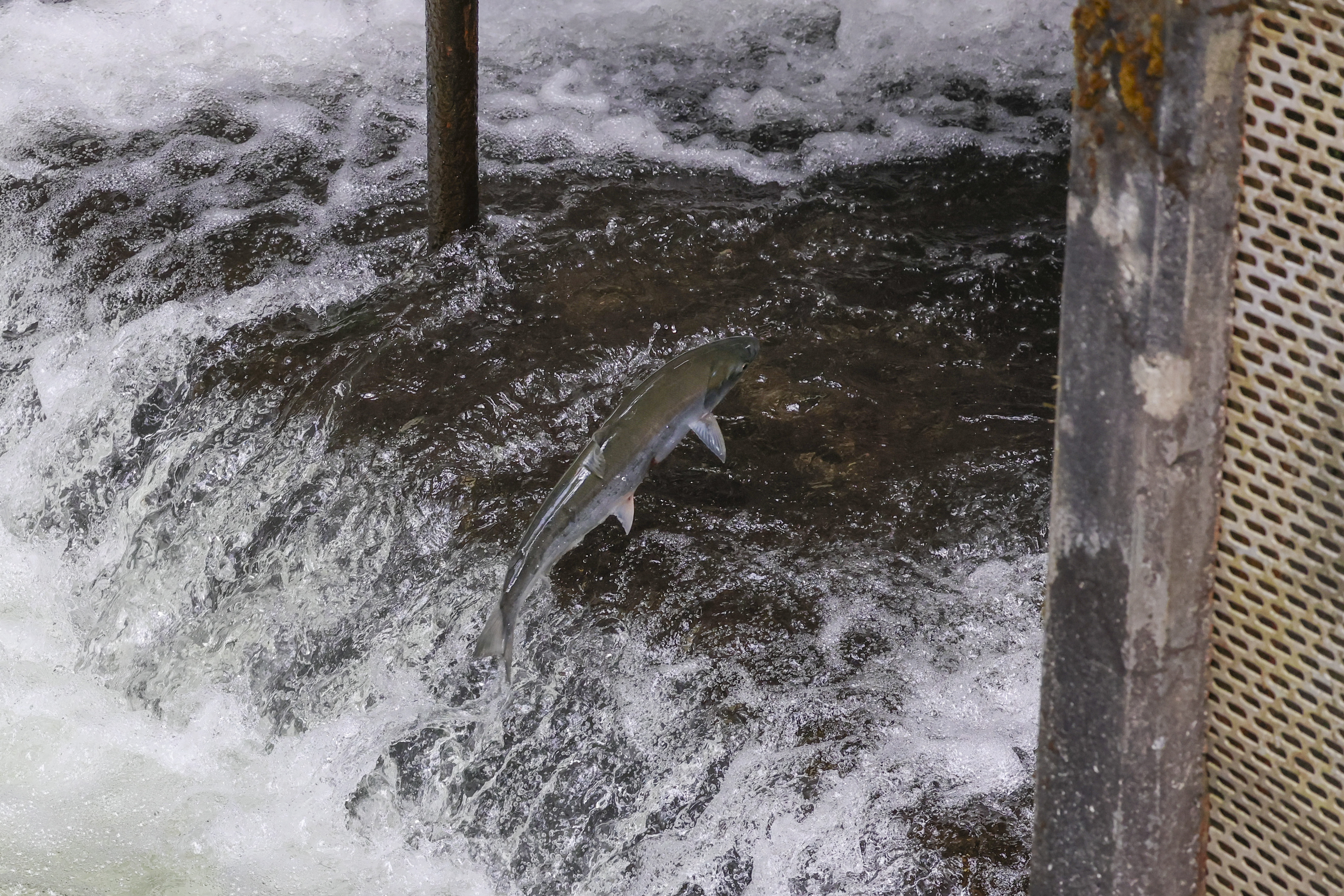
On the way back from our dog sledding excursion, we stopped at a waterfall where hundreds of salmon were battling the current, each attempting one powerful leap after another to reach their spawning grounds. A fish weir had been installed above the falls to divert a portion of the salmon into a hatchery program. Their eggs would be collected, hatched, and the young fish eventually released back into the wild to supplement the natural population. I found myself thinking that the fish entering the weir might be the lucky ones. Pacific salmon die after spawning, assuming they survive the long journey from the ocean back to the streams where they were born. Along the way they face waterfalls, exhaustion, and countless predators. The salmon diverted into the hatchery have a better chance of producing offspring that will survive to continue the cycle.
I rooted for the fish to be successful getting up the waterfall. Some fish made it look easy. Other fish slid back in the water to try again. Other fish were unfortunate to hit the man-made poles above the waterfall or land on the cement at the side of the fall. I witnessed one fish land on the cement but successfully get back into the water after a struggle. I imagined it needed to catch its breath and rest before trying again.
In the meantime, a pair of American dippers were nesting under the eave of the building next to the waterfall. American Dippers are unique among North American songbirds because they routinely walk and swim underwater in fast-moving streams, using their wings to “fly” beneath the surface while searching for aquatic insects and larvae. The parents were flying back and forth between getting food out of the stream and feeding it to the hungry chicks in the nest. There ability to swim underwater even in very cold temperatures is amazing to me.
Some of the fish pooling below the falls until they were ready to try to jump them did not look well. Many of the salmon bore sores and patches of deteriorating skin. By this stage of their journey they had stopped feeding, were living off stored energy, and their bodies were beginning the final transformation that accompanies spawning.They have a long journey from the ocean where they grew up to travel back up the rivers to the place they were born to start the cycle over again. In Alaska, the nutrients carried inland by spawning salmon support everything from bears and eagles to forests themselves.
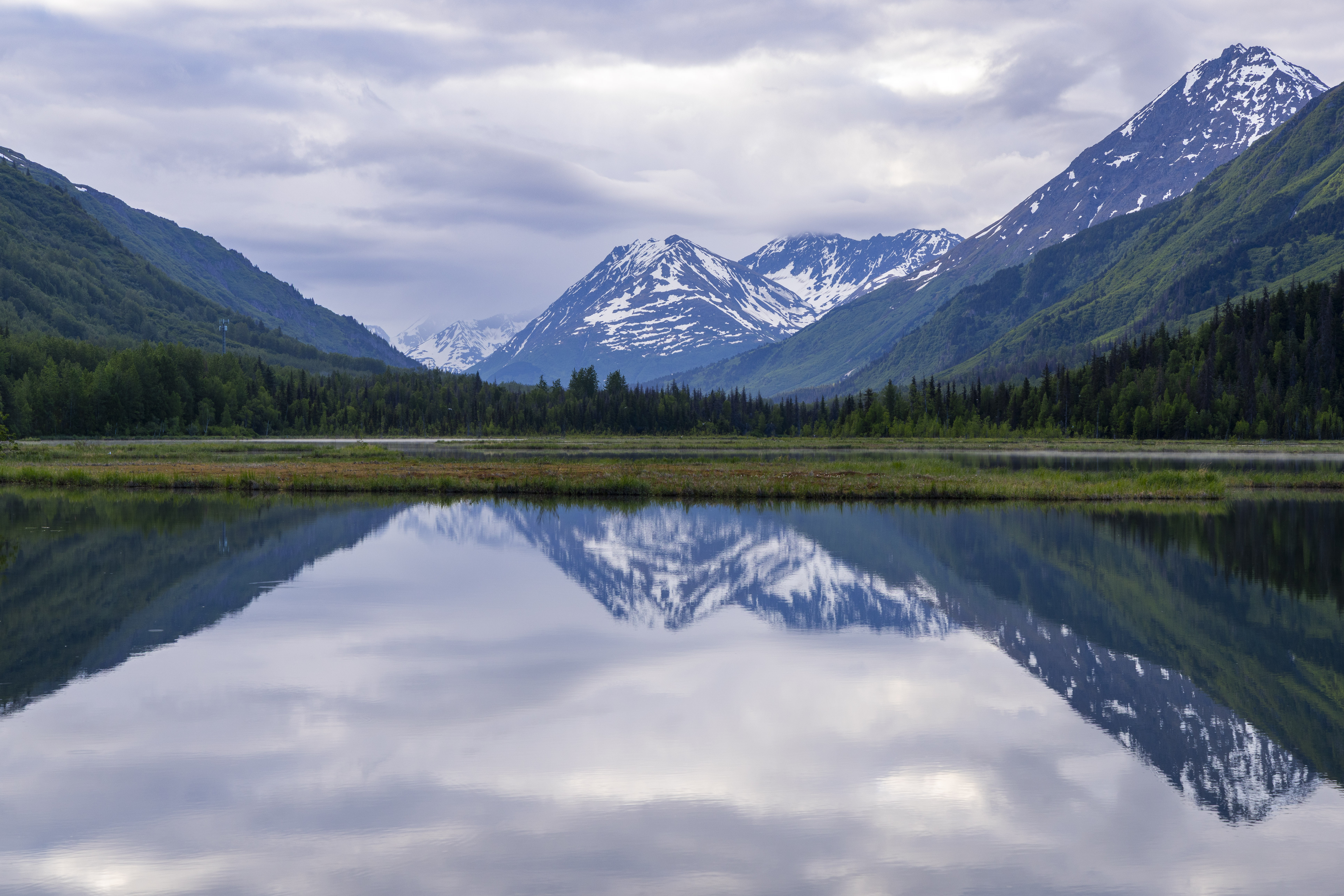
After visiting the fish jumping the falls, we stopped at Tern Lake. Arctic terns were nesting on the far side of the lake and we could see them gracefully fly and dive to catch fish and return to the nest to feed their young. They were too far away to get great photographs but they were a joy to watch as they make it look effortless. Arctic Terns nest around Tern Lake each summer after completing one of the longest migrations of any bird on Earth. They spend a part of the year in the Antarctica and the other part of the year in the Arctic where they breed.
We were fortunate that a pair of trumpeter swans with a single cygnet swam by us. The cygnet kept tucking under the tail feathers of the parent making it hard to see as a separate entity. Trumpeter swans often hatch several cygnets, so I wondered whether siblings had been lost to predators earlier in the season. Whatever had happened, this little cygnet was doing exactly what it should—staying close to its parents.
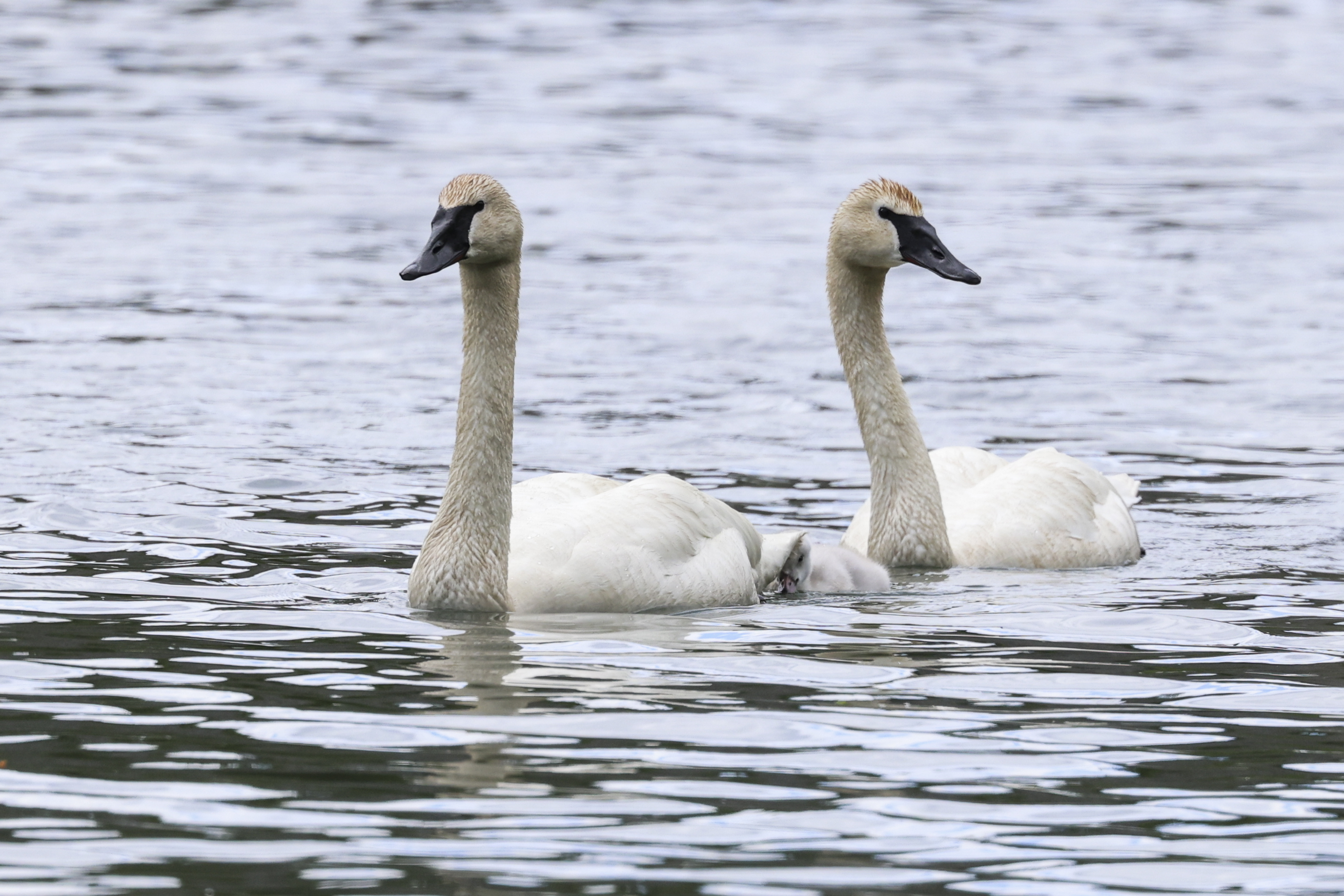
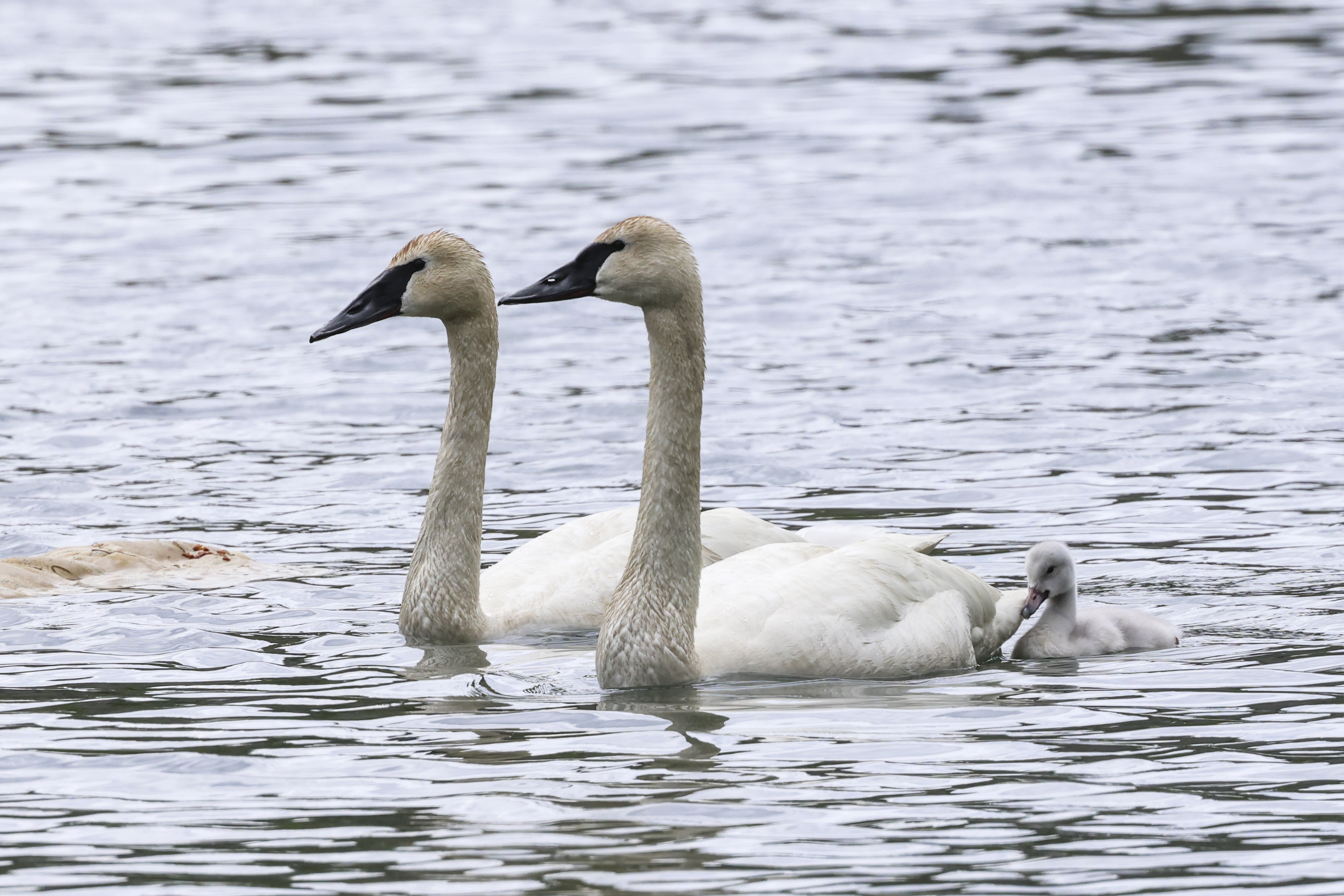
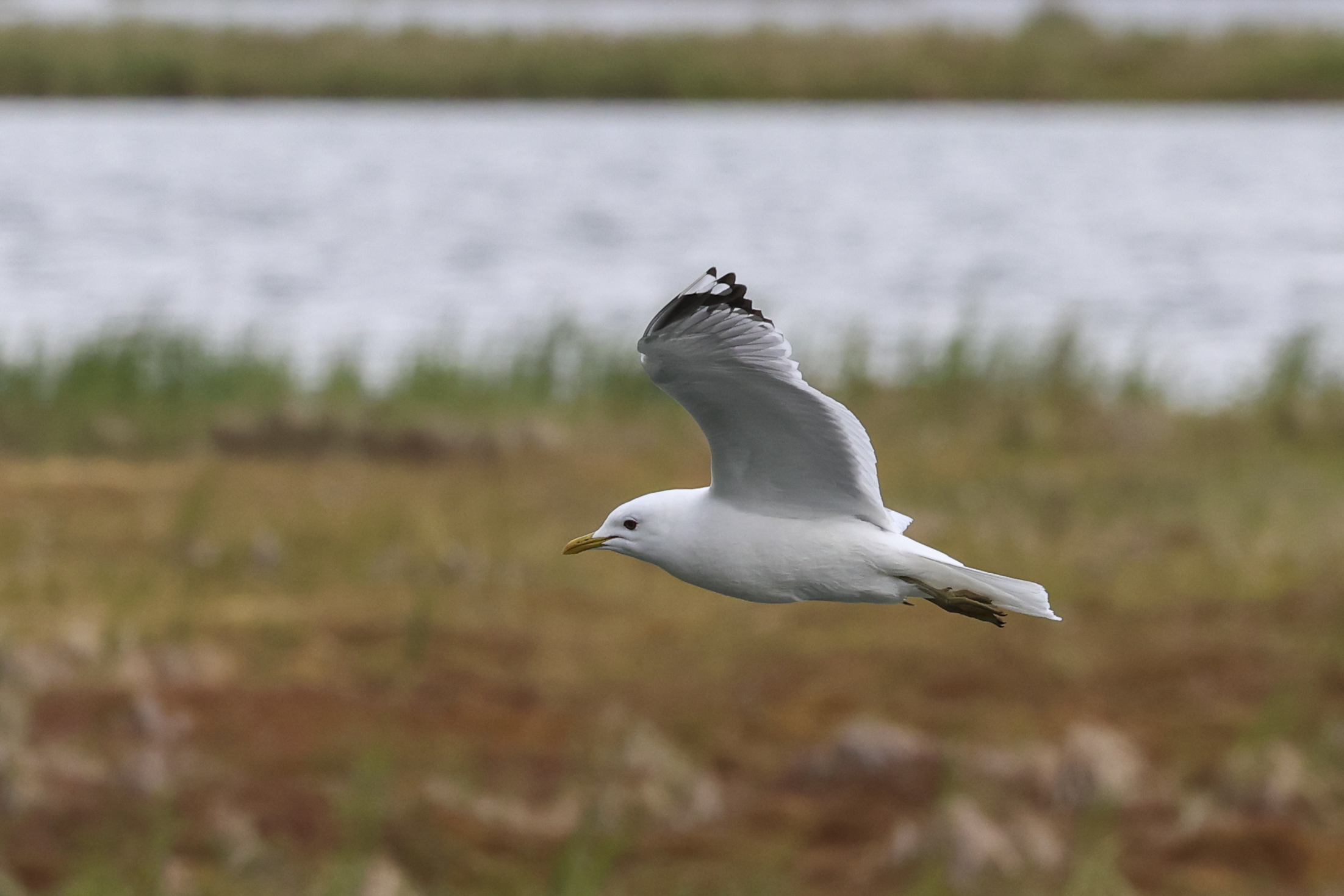
As we drove away, I realized the day had been about far more than beautiful scenery. Everywhere we stopped we witnessed the next generation—salmon struggling upstream to spawn, dippers feeding hungry chicks, terns delivering fish to their nests, and devoted swan parents protecting their lone cygnet. Alaska has a remarkable way of reminding you that survival is rarely easy, but life persists through determination and countless small acts repeated generation after generation.
This post was edited to correctly identify the swans.
 Linda Burek Photography