In Search of Bighorn Sheep

One of the reasons we stayed at Ginkgo Petrified Forest/Wanapum State Park was to look for bighorn sheep. We searched for them several times without success and decided to give it one more try on the evening before we left. We drove to a spot along the Columbia River where we have seen them in the past. Nothing.
We finally gave up and turned around to leave. And there they were—a group of females with several lambs.
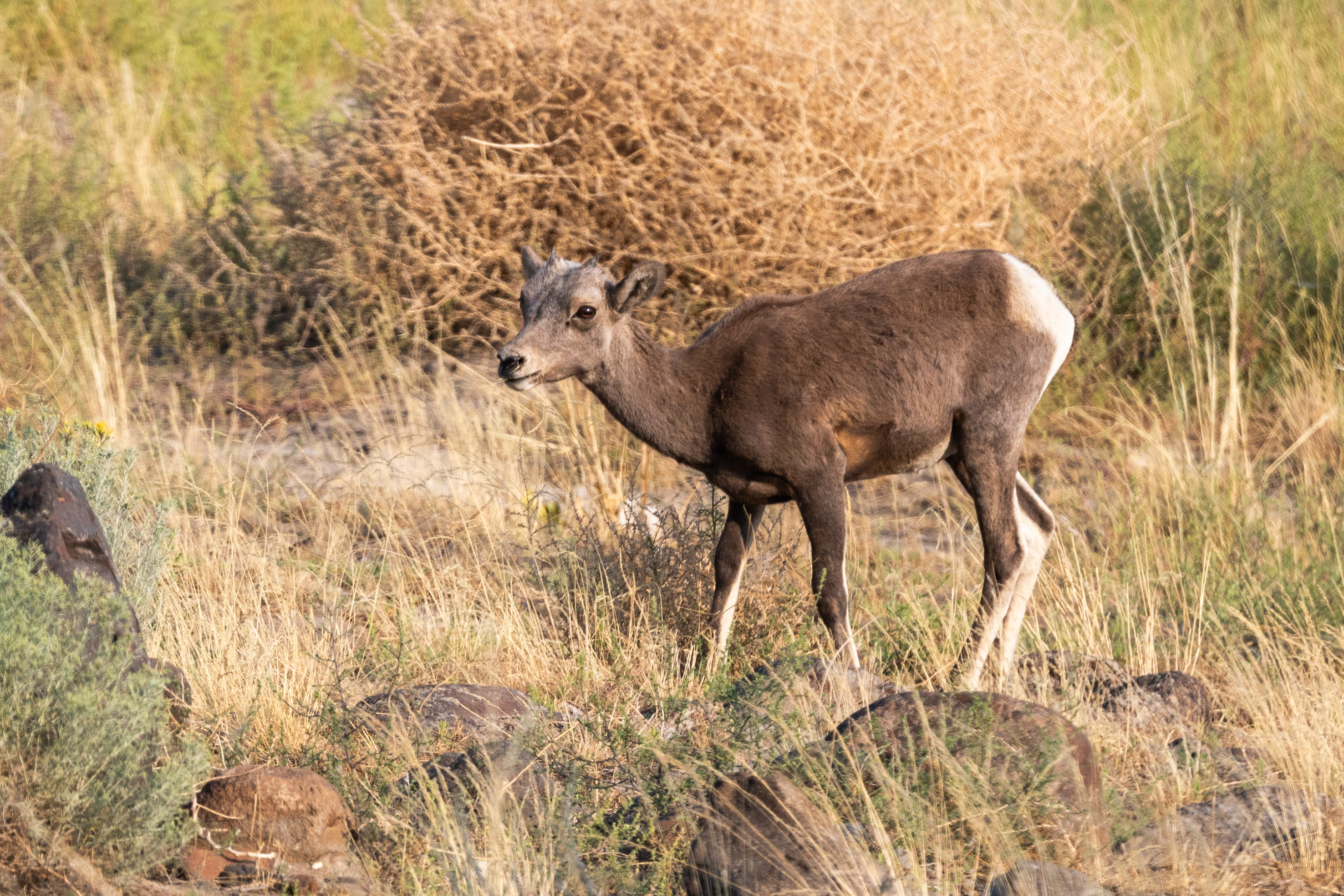
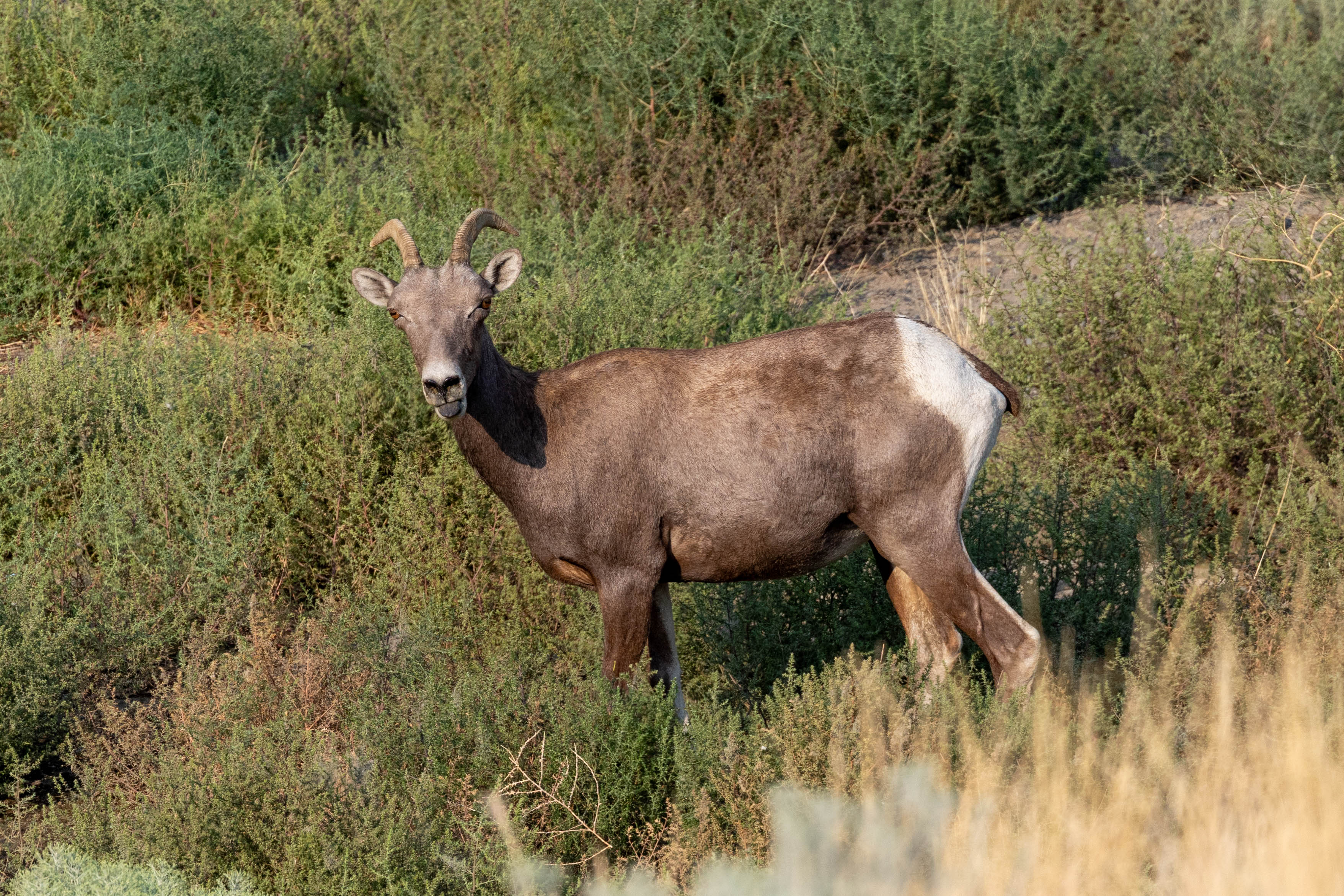
Bighorn sheep are well suited to this dry, rugged landscape. They get much of the moisture they need from the plants they eat and can travel considerable distances between water sources. Their sure-footedness allows them to move easily across steep, rocky terrain, which also provides an escape from predators. Here along the Columbia River, the sagebrush, bunchgrasses and other plants of the shrub-steppe provide food and cover. We watched the ewes and lambs make their way through the vegetation and head up a steep hill.
The next morning we left the dry shrub-steppe along the Columbia River and continued west. The arid landscape stayed with us until we reached the Cascades. We crossed Snoqualmie Pass and descended into what seemed like another world. Brown hills and sagebrush gave way to forests and lush green vegetation. By the time we reached the Olympic Peninsula, the temperature was cooler, everything was green, and we were surrounded by the waters of Puget Sound. Following is a two minute video of that drive.
 Linda Burek Photography