As the Crows Fly
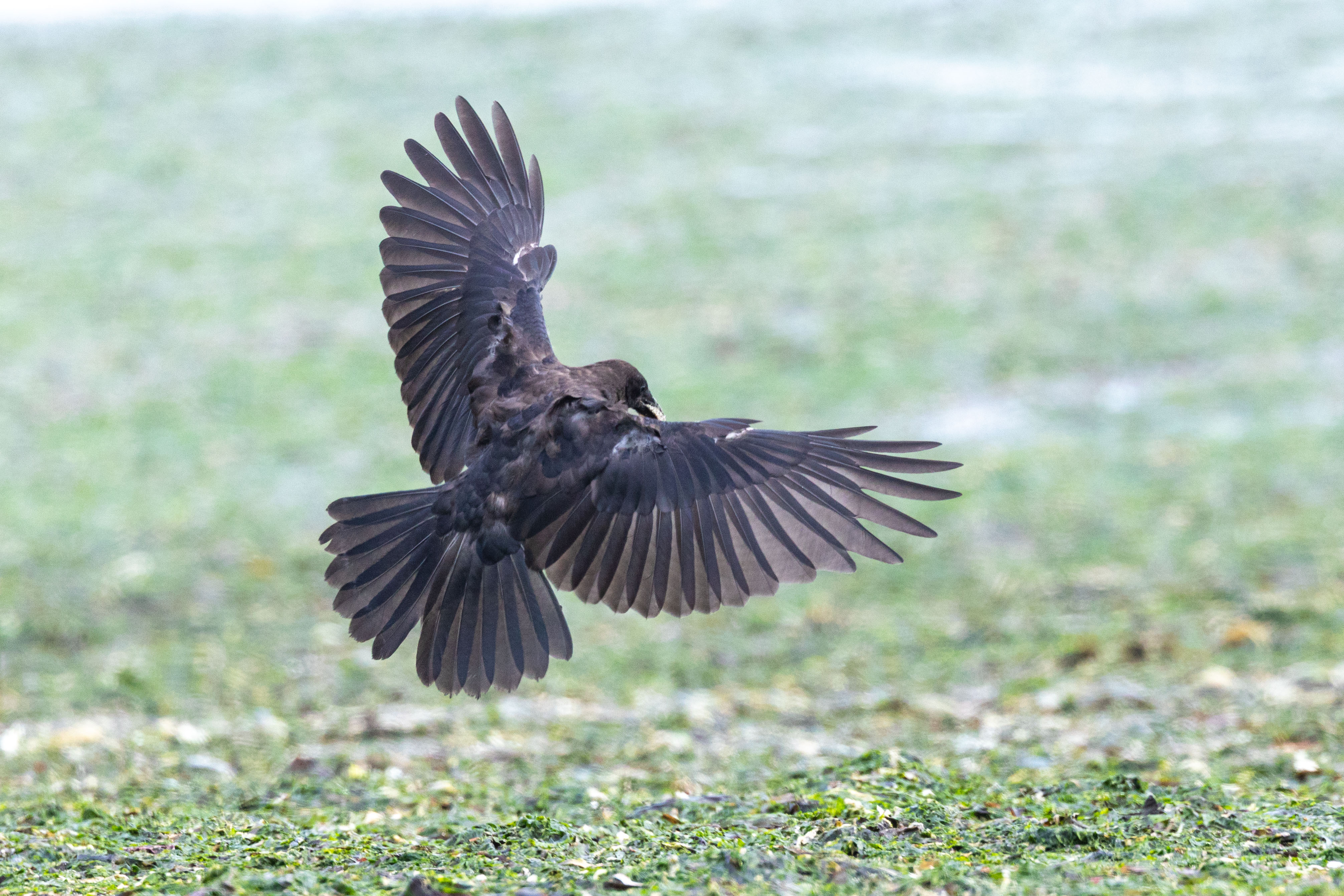
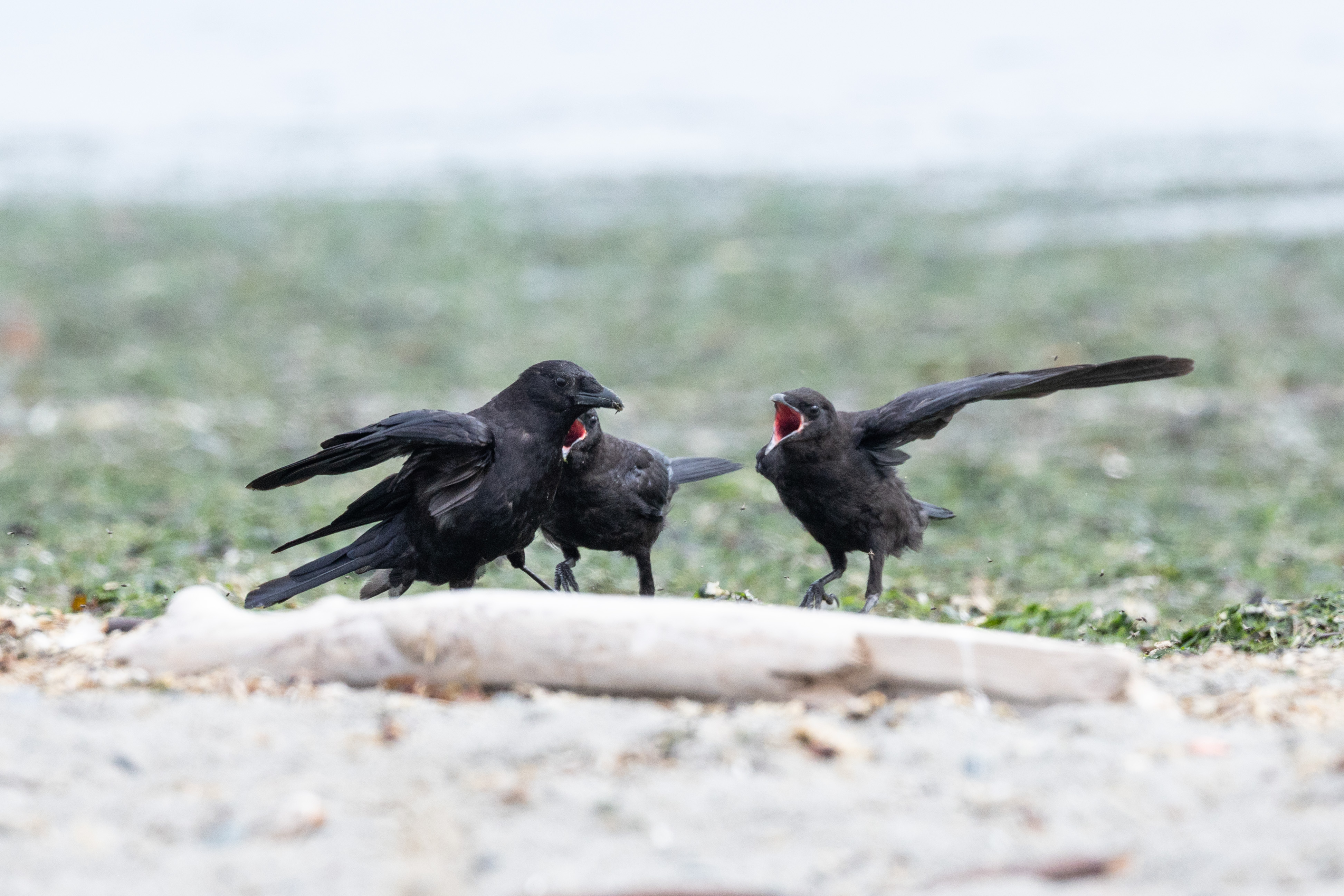
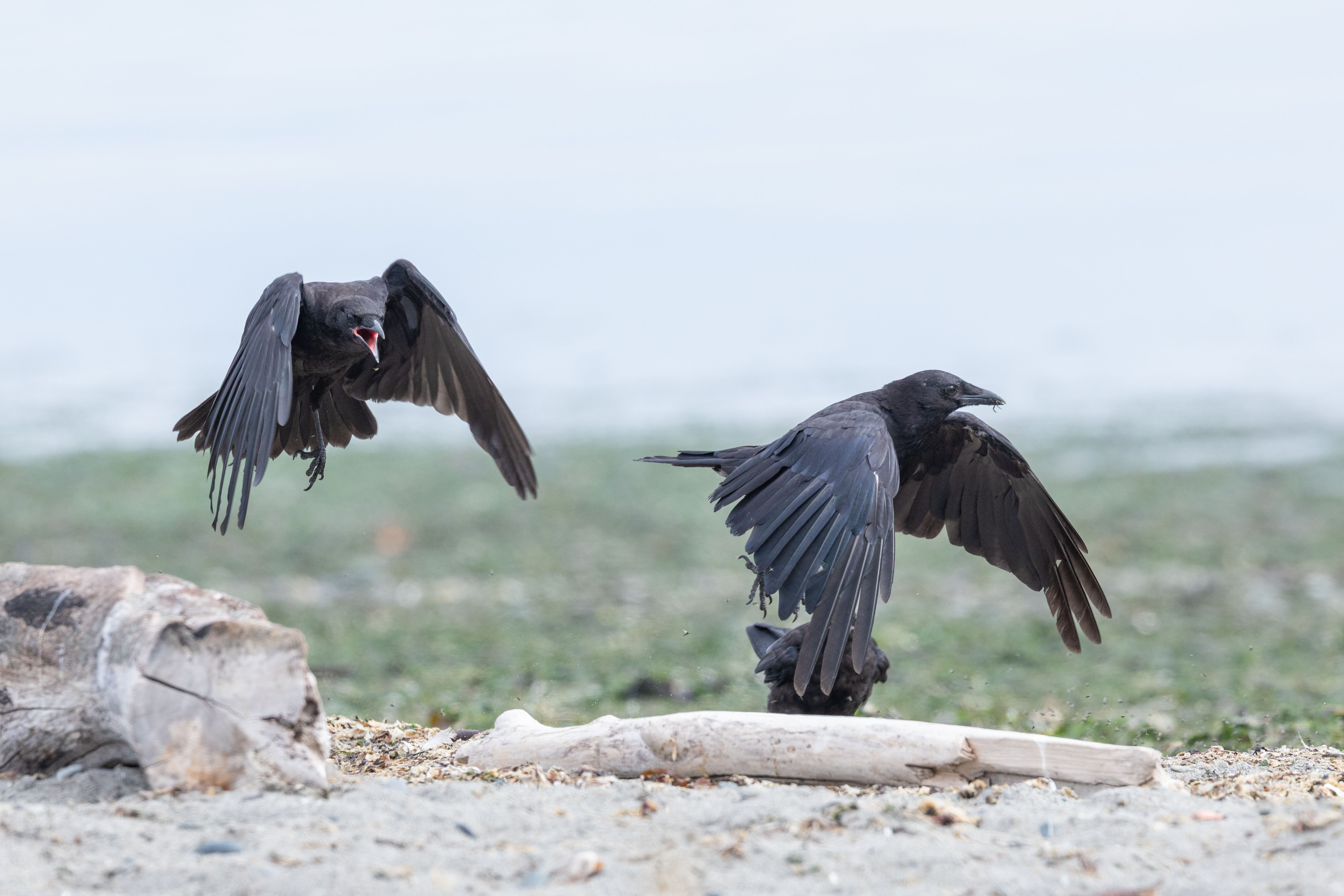
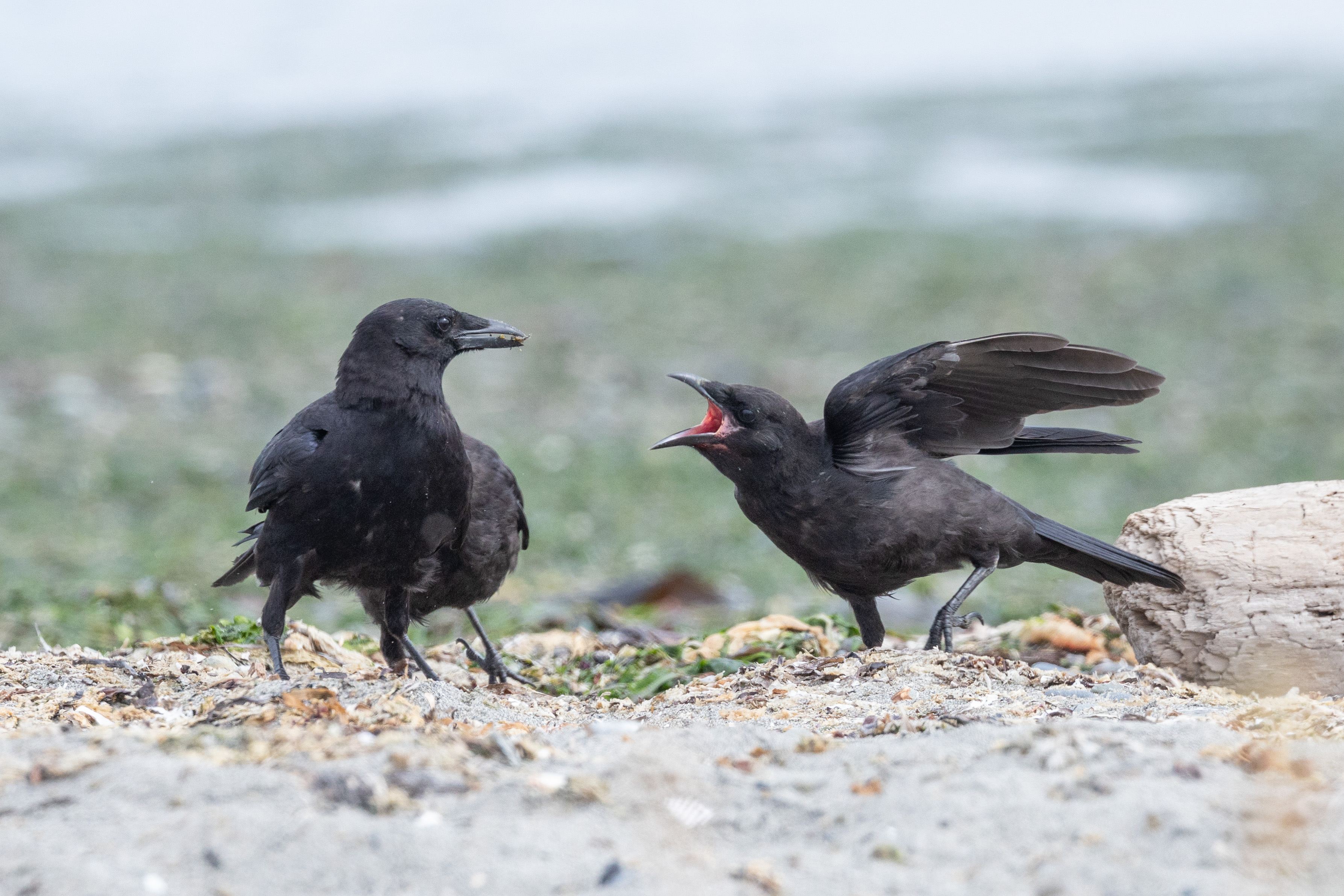
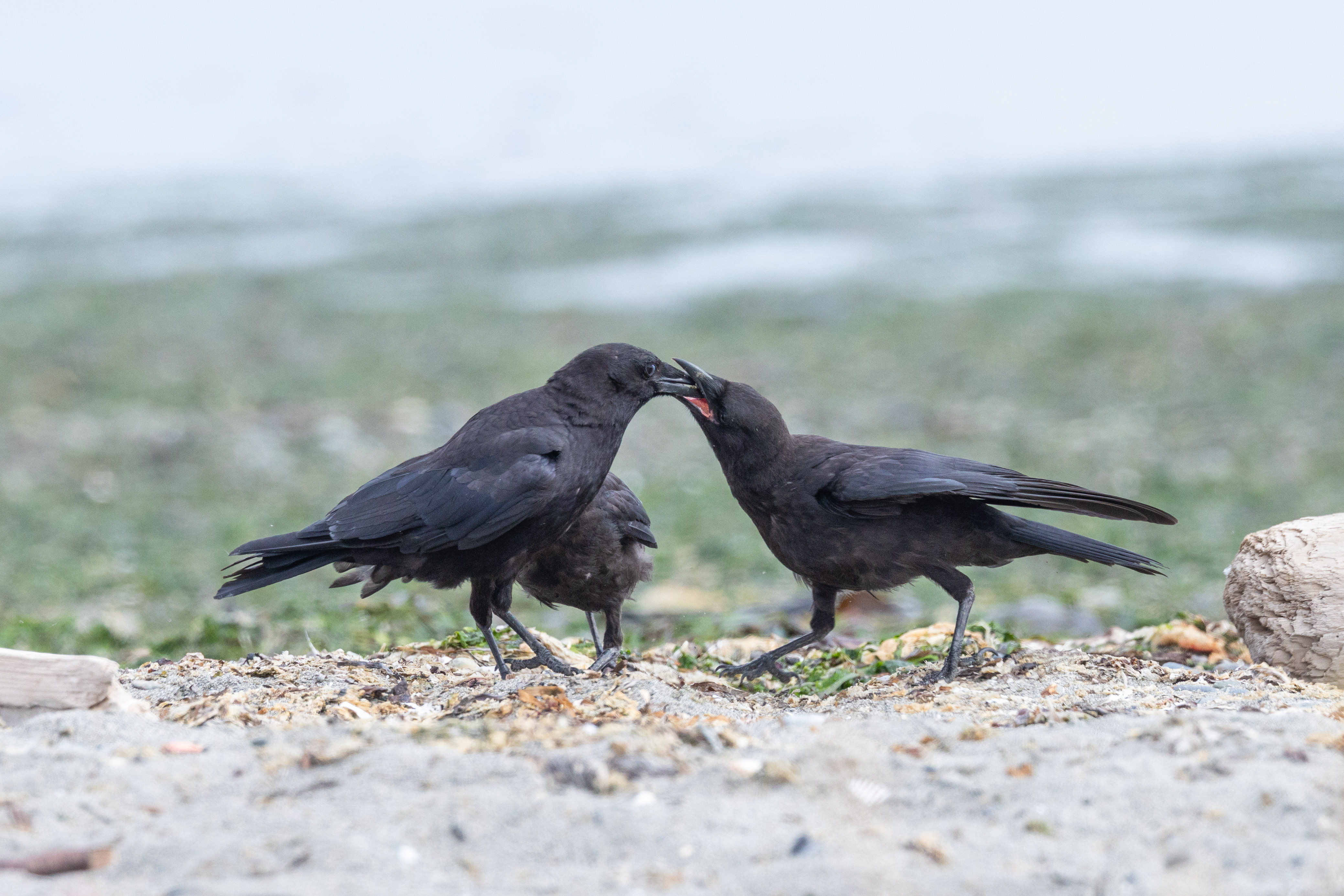
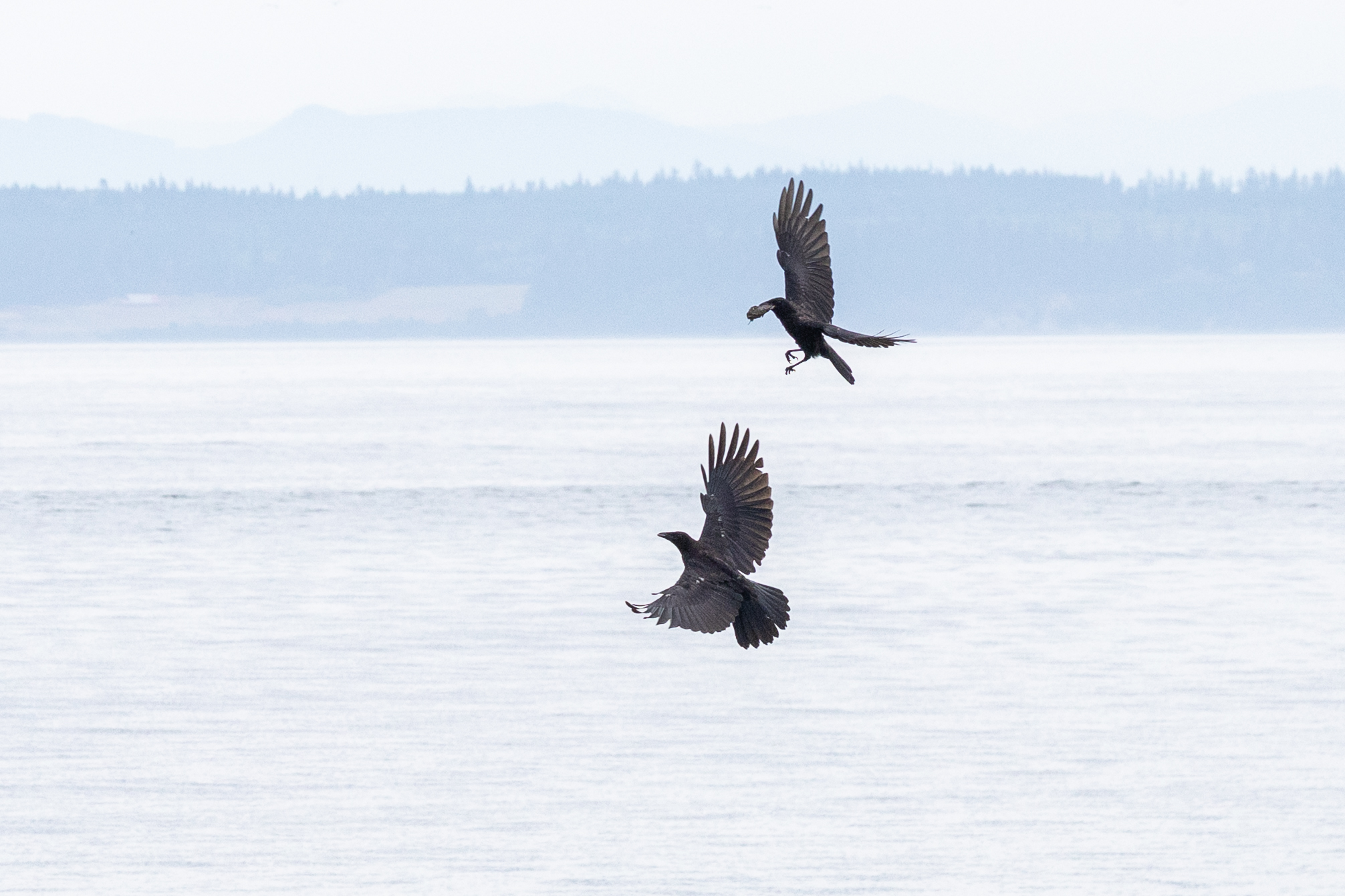
I spent time watching the crows feed on the beach and became enamored with one crow family with three young. The full-sized youngsters were chasing their parents and begging for food. Besides their begging behavior, the gape —the conspicuously colorful inside of a young bird’s mouth—was a clue that I was looking at a youngster. They were as big as their parents, but their mouths gave them away. There is something funny about a bird that looks perfectly capable of taking care of itself following Mom or Dad around demanding to be fed.
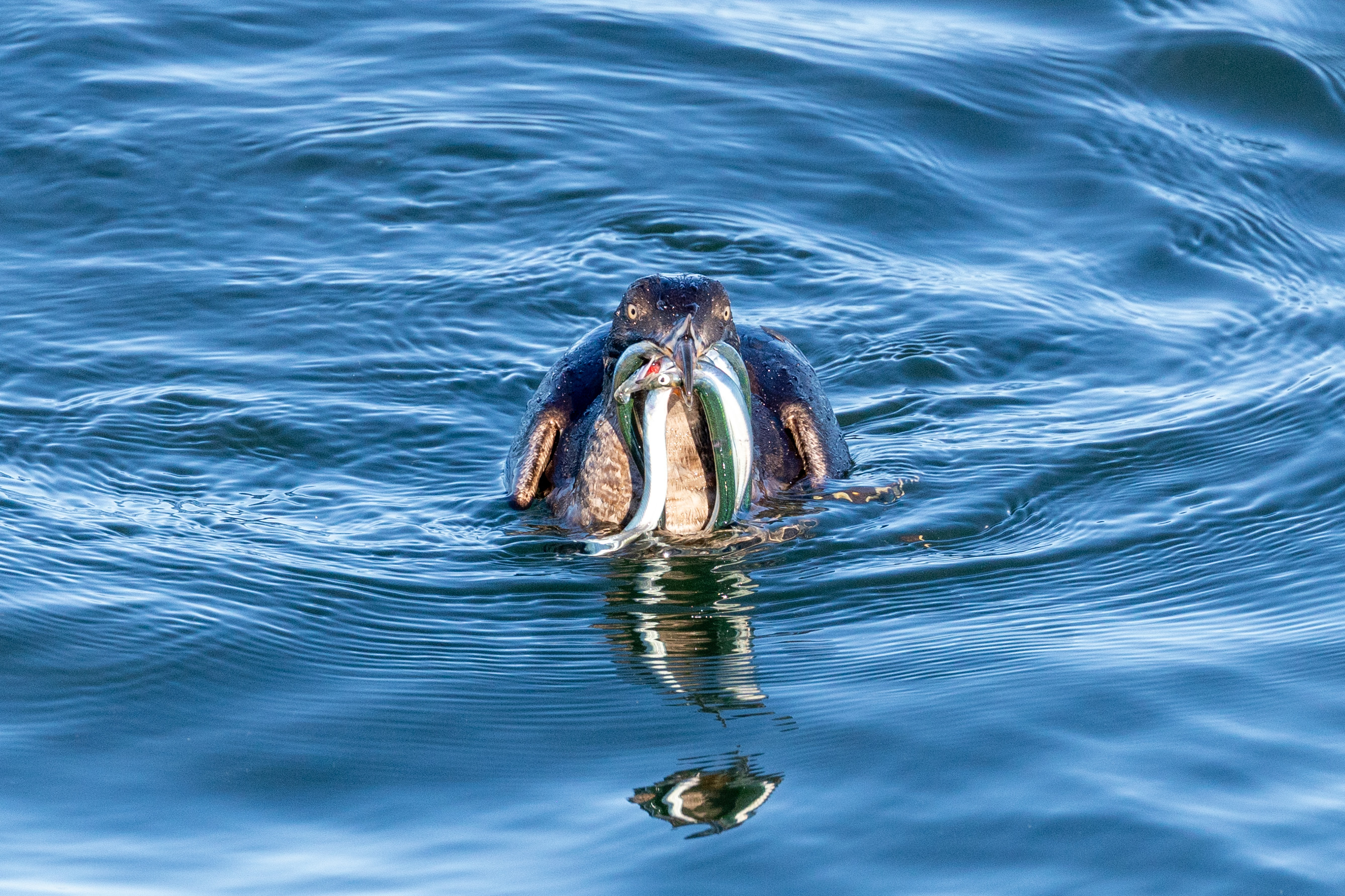
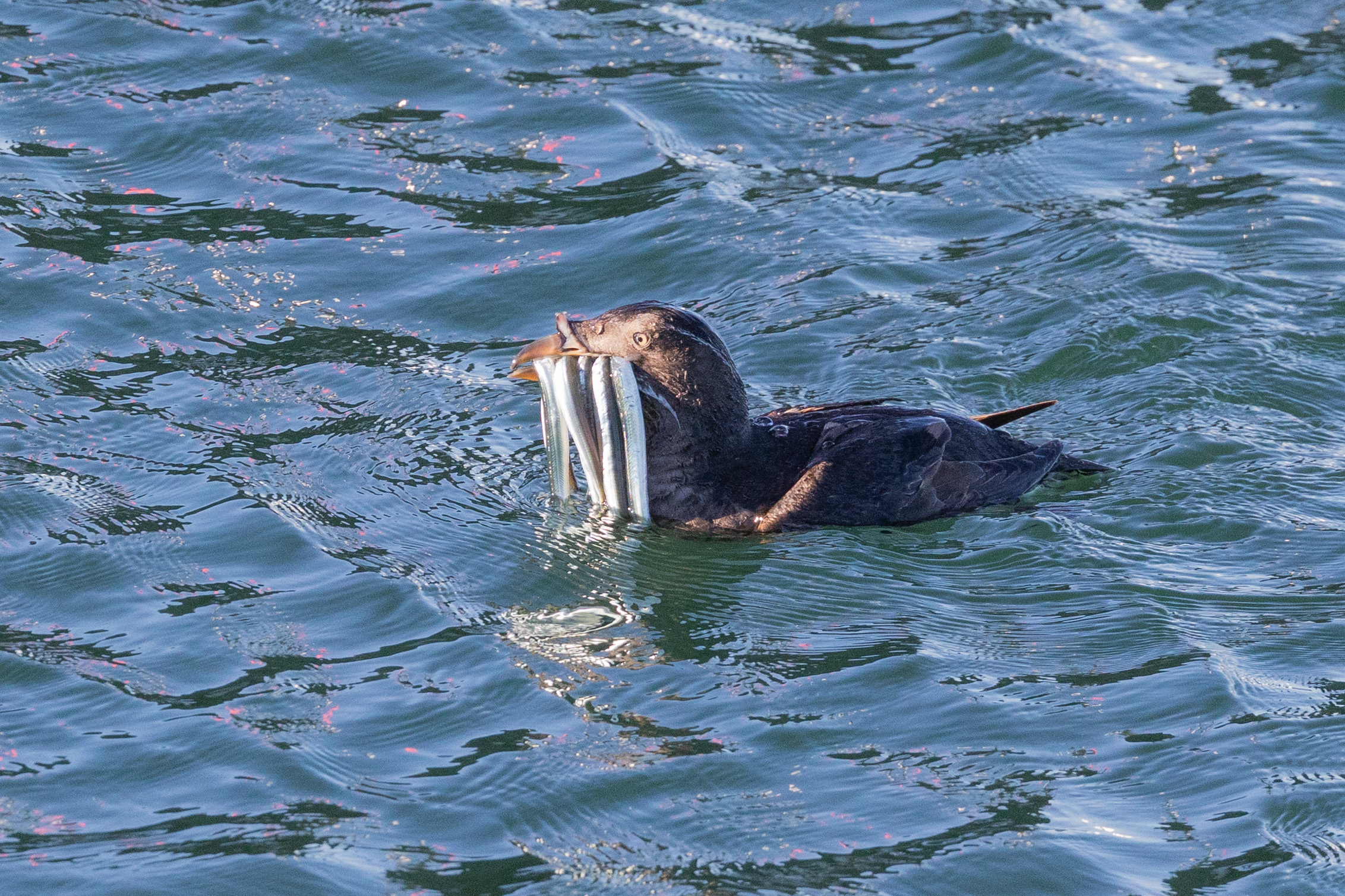
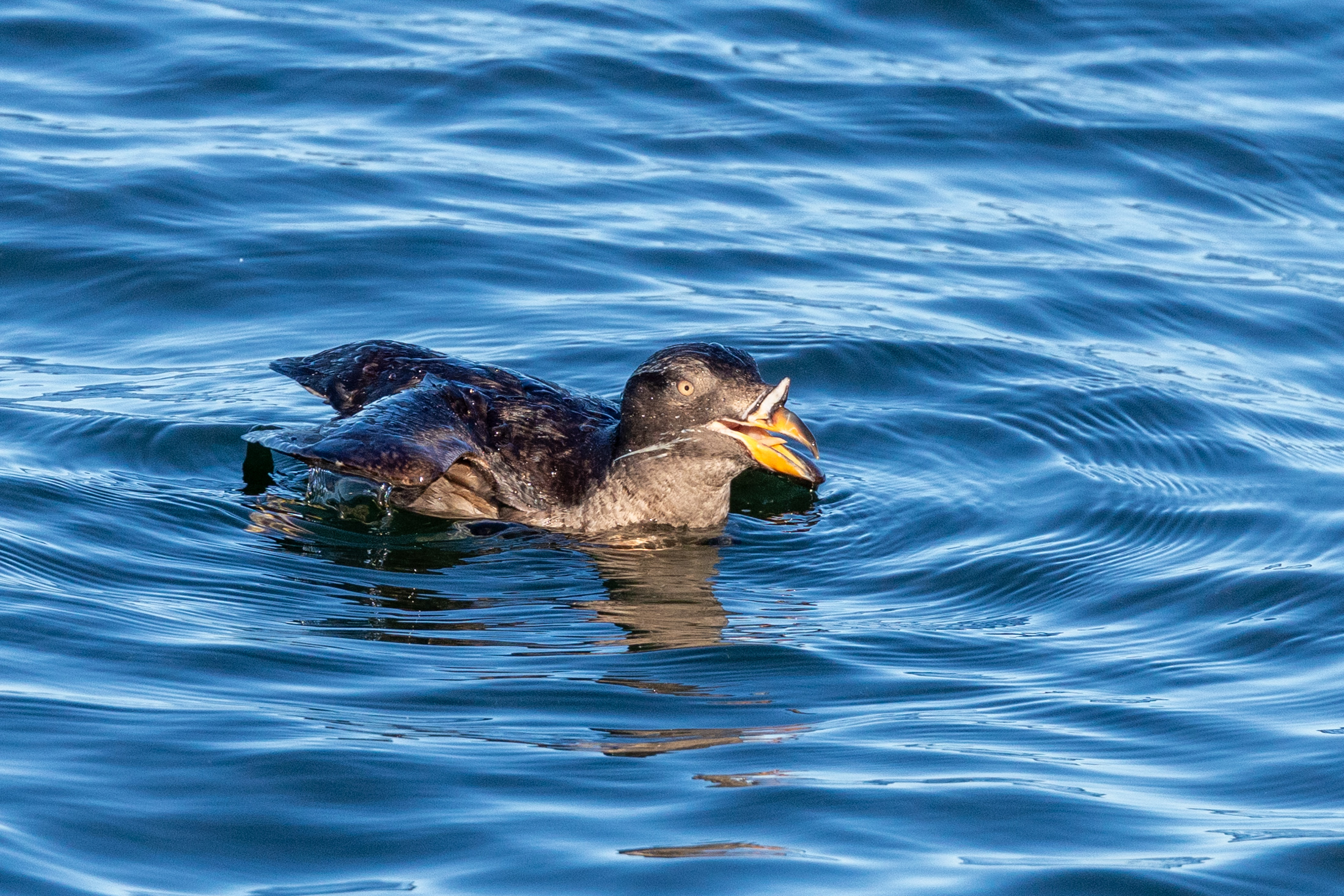
While wandering around looking for river otters, I came upon rhinoceros auklets with multiple fish in their mouths. The water is clear, so I was able to see the little birds swim in the water. Rhinoceros auklets are relatives of puffins, and they have special structures called palatal denticles—backward-pointing projections in the upper mouth—that allow them to hold onto fish they’ve already caught while continuing to catch additional ones. These birds dive under water to pursue small schooling fish and propel themselves with their wings and steer with their feet.
Since the auklets were carrying multiple fish, they were likely transporting food rather than feeding themselves. During the breeding season they carry fish back to their chick in a nesting burrow. They often gather offshore late in the day and wait until darkness before returning to the colony, which probably helps reduce theft by gulls.
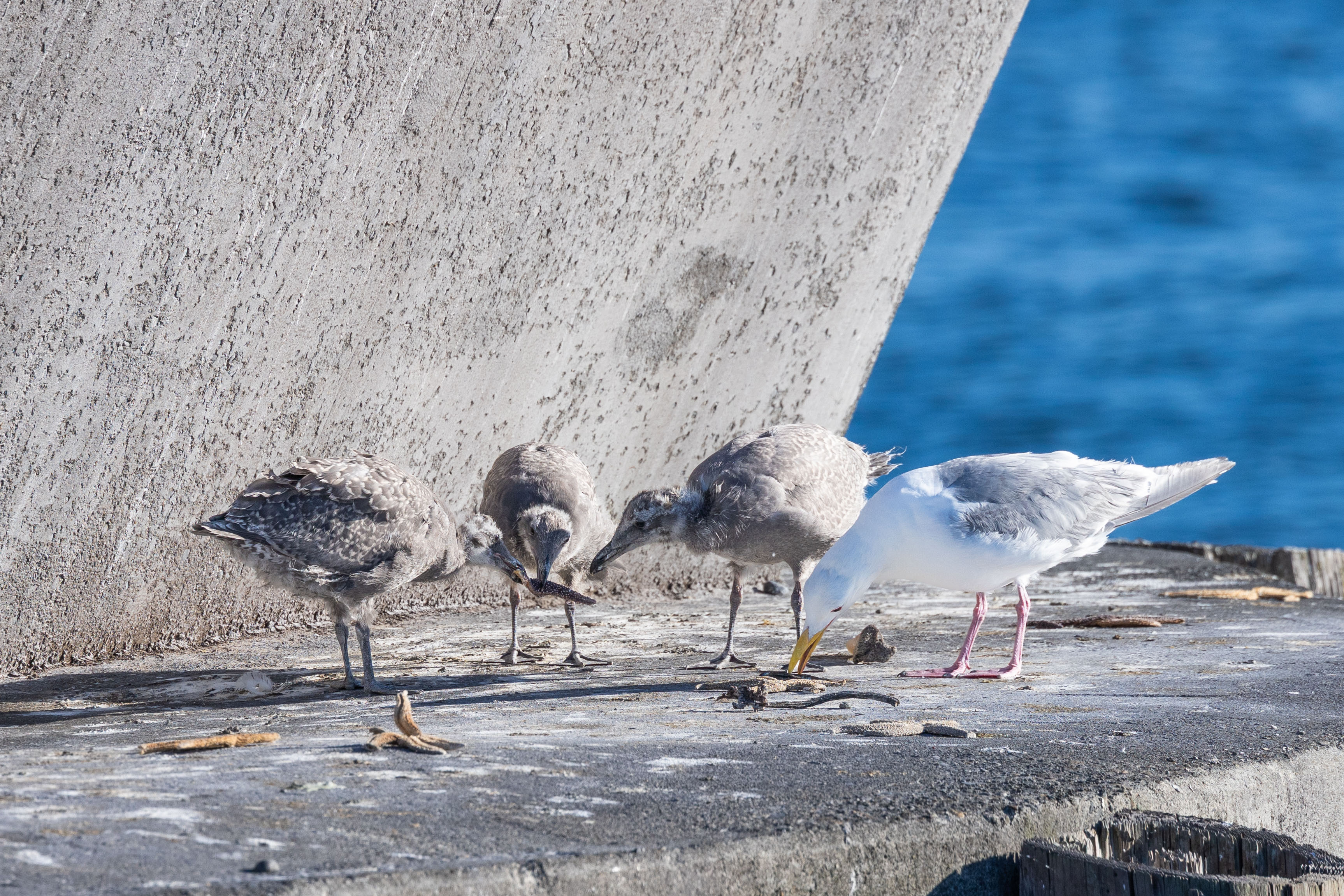
I saw a couple adult gulls with three large young perched on a concrete structure in the water.
Perhaps one of the coolest things was being able to do slow-motion video of a gull swallowing a still-wriggling fish. I think the slow-motion in the video makes it easier to notice that the fish is still struggling inside the bird. Slow it down and suddenly there is an entire event taking place that our eyes weren’t fast enough to appreciate. Birds have a flexible esophagus, and a struggling fish can remain visibly mobile as muscular contractions move it toward the stomach. Many fish-eating birds orient larger fish headfirst before swallowing, which also folds the fins in the direction least likely to catch on the way down.
 Linda Burek Photography
Your blogs are always so interesting Linda. You must be a walking encyclopedia with all your knowledge about the wild life.Sent from my iPhoneOn Aug 13, 2026,
LikeLike
You give me too much credit. I research a lot of this before putting it in the post. I’m curious about what I see and look into it and include some of it in the posts and share what I learned.
LikeLike
I had never heard of an auklets before. Thanks for the information on the bird. The picture with a full mouth looked like a beard to me.
LikeLiked by 1 person
Amazing how interesting you can make crows and seagulls! Thank you!
LikeLiked by 1 person