A Whale of a Day
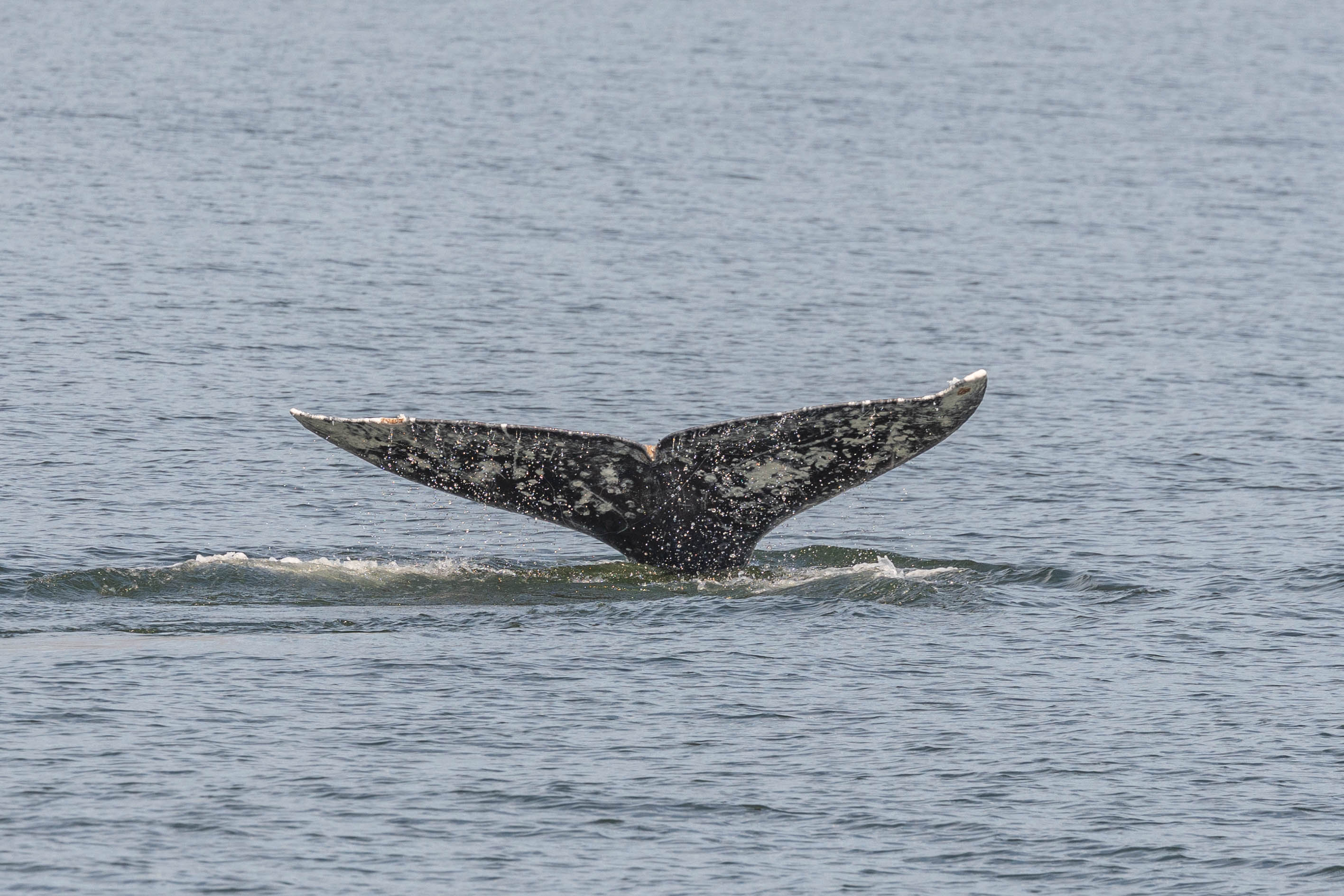
I went on a whale-watching tour with Puget Sound Express yesterday out of Port Townsend, Washington. The boat leaves from the marina right next to our campground, making this one of the easiest excursions of the trip—and certainly one of the most memorable.
Our first encounter was with two gray whales feeding in shallow water at the south end of Whidbey Island.
Most eastern North Pacific gray whales spend the winter in the warm lagoons of Baja California, Mexico, where they mate and give birth, then migrate north to feeding grounds in Arctic waters. But some take a significant detour into Puget Sound. A small group of repeat visitors, known as the “Sounders,” has been documented feeding around Whidbey and Camano islands since 1990.
Gray whales are bottom feeders. Around Whidbey Island, they move into shallow water at high tide and suction sediment and ghost shrimp from the bottom, using their baleen to filter out the food. We were able to watch the two whales feeding in remarkably calm water.
The Sounders have traditionally been spring visitors, usually feeding here during their northward migration. In recent years, however, some gray whales have been staying later and using these waters at different times of the year. Seeing two feeding here in August made the encounter even more special.
From there, we headed into deeper water and found a humpback whale.
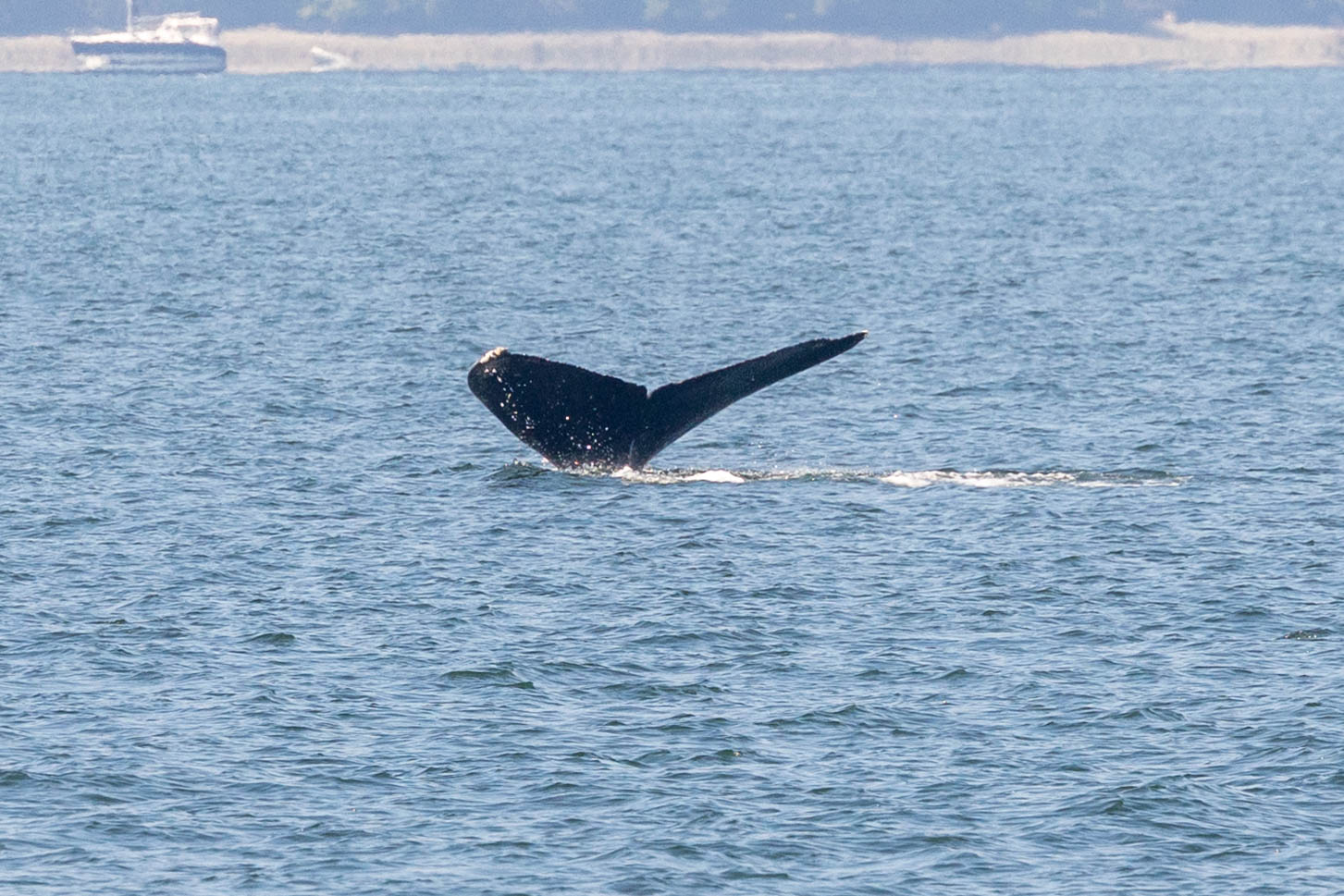
The naturalist identified this whale as Graphite, a humpback born in 2019 to a female named Slate. Humpbacks that feed in the waters of Washington and British Columbia migrate thousands of miles between northern feeding grounds and winter breeding grounds, primarily in Hawaii and Mexico.
Researchers can recognize individual humpbacks by the pigmentation, patterns and scars on the underside of their tail flukes. Graphite raised its tail for us several times, giving me both photographs and video of an individual whale whose history has been followed for years.
When I visit Hawaii, apparently I now have two whales to look for—Picasso from my Alaska trip and Graphite from this one.
But the day wasn’t over.
We left Graphite and eventually encountered about ten Bigg’s orca’s, formerly called transient killer whales, traveling in three family groups. They were named in honor of Canadian scientist Michael Bigg, whose work demonstrated that individual orcas could be recognized by their dorsal fins and saddle patches. Bigg’s orcas hunt marine mammals such as harbor seals, seal lions and porpoises, while the endangered Southern Resident orcas eat salmon.
At times there seemed to be orcas everywhere. A dorsal fin would appear in one direction, another group would surface somewhere else, and then another whale would rise behind us. After watching gray whales quietly feeding in shallow water and a solitary humpback traveling through deeper water, suddenly being surrounded by orcas was an entirely different experience.
Gray whales. A humpback. Bigg’s orcas. Three very different kinds of whales, all within about four hours on a beautiful day on the Salish Sea.
Words don’t adequately describe what it felt like to experience all three in one morning.
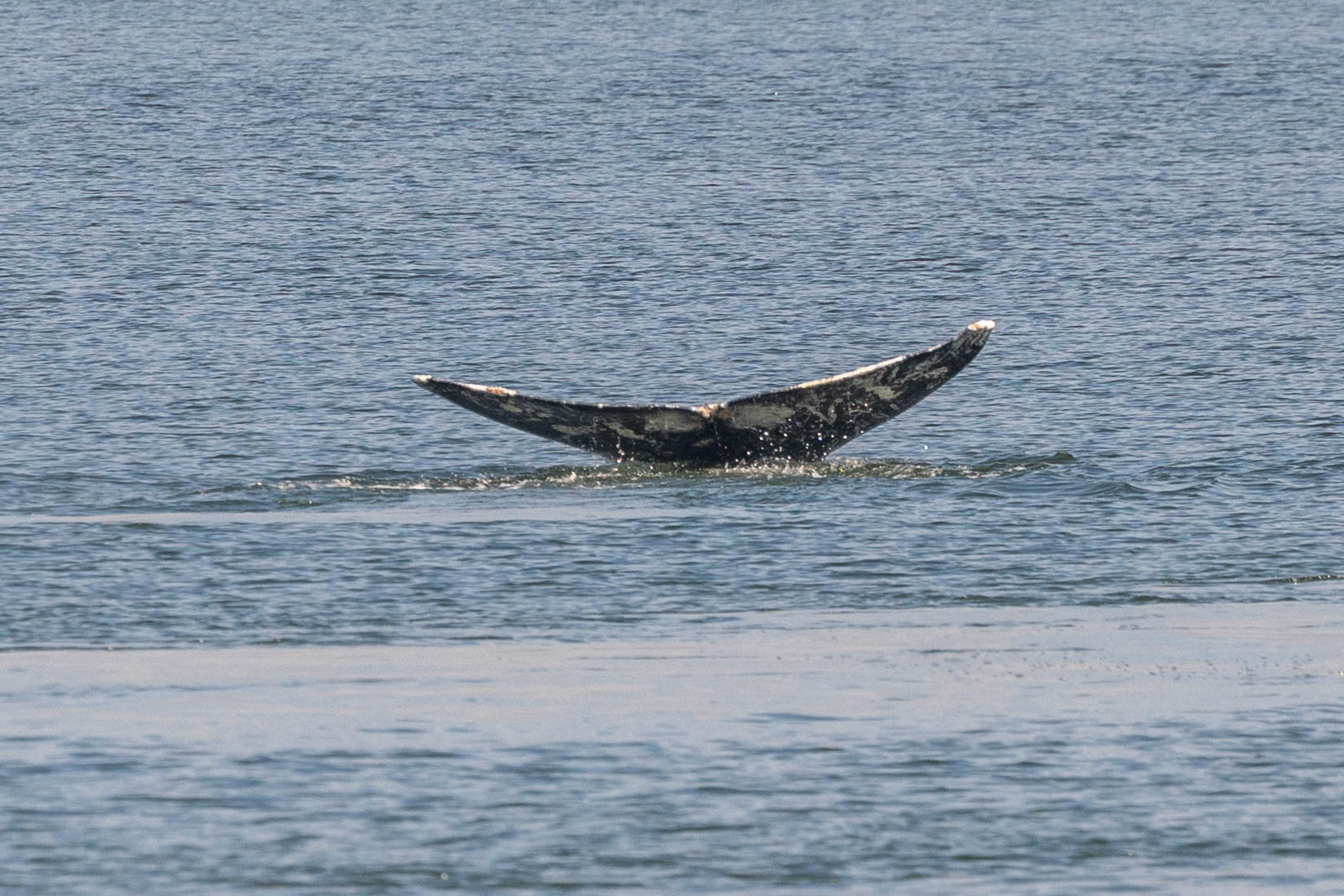
I have photographs and video from each encounter—and, appropriately, everyone gave me a tail. (The orca tails are in the video.)
 Linda Burek Photography
All I can say is WOW!! What an experience!
LikeLike